




Do Aluminium Windows Reduce Noise at Home?
A premium extension can look exceptional on completion, yet still disappoint if traffic, rail noise or neighbouring activity is clearly audible through the glazing. So, do aluminium windows reduce noise? They can, but aluminium is not a soundproofing material in isolation. Acoustic performance comes from the complete, correctly specified window: the glass build-up, insulated frame, perimeter seals, opening configuration and installation quality all matter.
For installers, developers and homeowners, the useful question is not whether aluminium is quieter than every alternative. It is whether the proposed aluminium window system can achieve the acoustic result the project needs. With the right specification, it can make a meaningful difference to comfort in homes, flats, offices and mixed-use schemes.
How aluminium windows reduce noise
Sound travels as vibration through air and solid materials. A window reduces that transfer by creating mass, separating panes of glass, sealing the opening and limiting weak points around the frame. Modern aluminium windows are well suited to this work because their rigid profiles can support high-performance sealed units, including thicker, laminated and asymmetric glass combinations.
The frame itself should not be viewed as the main acoustic barrier. Glass accounts for most of a window’s area, so its specification usually has the greatest effect. However, a well-engineered aluminium frame provides a stable platform for the glazing and compression seals. It is particularly valuable where larger panes, slim sightlines or bespoke shapes are part of the design.
A tightly closing casement window will generally perform better acoustically than a poorly adjusted opening, whatever material the frame is made from. Equally, a high-specification glass unit can underperform if air can pass through gaps at the sash, frame or surrounding reveal.
Glass specification makes the biggest difference
Standard double glazing provides a useful baseline, particularly compared with older single glazing. But projects close to busy roads, rail lines, schools, airports or town-centre activity often need a more considered glass make-up.
Acoustic laminated glass is a common upgrade. It uses an interlayer between panes that helps dampen vibration as sound reaches the glass. It can also contribute to safety and security performance, depending on the specification. Using panes of different thicknesses is another effective approach. Sound frequencies can pass through equal panes more readily, whereas asymmetric glass disrupts a wider range of frequencies.
The cavity between panes also plays a part. A properly designed insulated glass unit creates separation between the glass layers, but wider is not automatically better in every situation. The optimum build-up must work with the chosen aluminium system, thermal target, overall glass thickness and required safety classification.
Triple glazing can improve acoustic performance in some applications, but it is not an automatic answer. A poorly selected triple-glazed unit may offer little advantage over a well-designed acoustic double-glazed unit, especially against particular low-frequency traffic noise. It also adds weight and can affect sightlines, opening sizes and cost. The glazing make-up should be selected against the actual noise source rather than by pane count alone.
Why seals and installation are as important as glass
Noise finds the smallest available route. A tiny gap around an opening sash, a poorly sealed frame or an unsealed service penetration can undermine the performance suggested by a glass data sheet. This is why acoustic glazing and careful installation must be treated as one package.
Quality aluminium window systems use weather seals and compression seals to help create a controlled, airtight closure. During fabrication and installation, the frame must remain square, the sash must be adjusted correctly and the seals must make consistent contact. The perimeter joint between frame and structure also requires an appropriate backing material and sealant strategy, suited to the substrate and movement expected within the opening.
For a new-build developer, this means acoustic intent needs to be carried from the drawing through to final checks on site. For a replacement project, it means assessing the condition of the existing reveals, cavity closers and surrounding construction before assuming the new windows alone will resolve the problem.
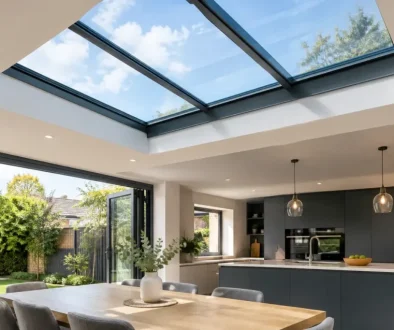
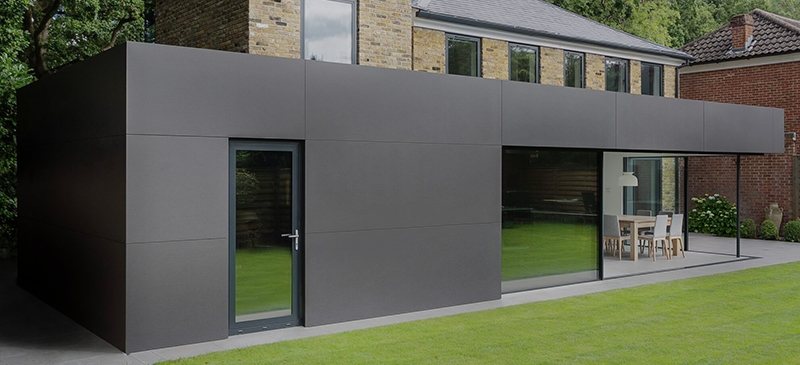
Large-format glazing deserves particular attention. Sliding doors, bifolds and fixed screens can provide impressive views and daylight, but they contain more glass and, in the case of opening elements, more junctions to manage. A quality system, correctly fabricated and adjusted, can perform very well. It should simply be specified with realistic expectations and appropriate glass for the location.
What level of noise reduction can you expect?
Acoustic performance is commonly expressed in decibels, often using a weighted sound reduction figure such as Rw. A higher figure indicates that less airborne sound passes through the tested element. The practical result is not always as simple as the number suggests, because different sounds behave differently. The low rumble of heavy vehicles, intermittent train noise, aircraft and higher-pitched voices all have different frequency profiles.
It is also essential to distinguish between a glazing unit’s laboratory figure and the performance of the installed window. The completed window’s rating includes the frame, seals and opening arrangement. The completed façade performance can be lower again if sound travels through walls, roof junctions, vents or other components.
For this reason, a project beside a main road should start with a noise assessment or a clear understanding of the site conditions. An architect or acoustic consultant can identify the required internal noise levels and help translate them into a window and ventilation specification. This is more reliable than choosing an arbitrary acoustic glass option after the frames have been ordered.
Do not overlook ventilation
A well-sealed window can reduce noise, but occupiers still need suitable ventilation. Traditional background ventilators may become a weak point in an otherwise high-performing acoustic window arrangement. Where significant external noise is present, the ventilation strategy needs early coordination with the window design and wider building services plan.
This is particularly relevant where compliance with ventilation requirements must be balanced against acoustic comfort. Depending on the building type and project scope, alternatives may include acoustically attenuated vents or a designed mechanical ventilation approach. The right route depends on the building, occupancy and applicable regulations, so it should be resolved before fabrication rather than treated as a late-stage detail.
Choosing aluminium windows for a noisy location
The most effective specification starts with the site, not a generic product description. Establish where the noise comes from, when it is most noticeable and which rooms require the greatest protection. A bedroom facing a busy road may need a different glazing build-up from a rear living space overlooking a quiet garden.
Then consider the full window design: fixed or opening sections, glass thickness and laminate, frame depth, seals, ventilation, installation detail and the surrounding wall construction. Where security is required, confirm that acoustic choices sit alongside the relevant safety and security requirements. PAS 24, for example, is a valuable security standard, but it is not an acoustic rating.
Thermal and acoustic performance should also be considered together, rather than traded off unnecessarily. Modern thermally broken aluminium systems can support excellent thermal results while accommodating high-performance glazing. A low U-value does not prove noise reduction, however, just as an acoustic glass specification does not guarantee thermal performance. Each requirement should be verified independently for the exact configuration.
At Rhino Aluminium, fabricated aluminium window systems can be specified around the needs of the project, from contemporary casements to heritage-style designs and larger glazed elements. For trade customers, the key is providing the required glass and performance information early, so the system, glazing and fabrication details can be assessed before manufacture.
A practical specification checklist
Before placing an order for aluminium windows in a noisy setting, confirm the source and likely frequency of the noise, the target acoustic performance for each elevation, and whether the stated figure applies to glass alone or the complete window. Check that the chosen sash configuration and opening method are included in the performance evidence.
Also confirm the proposed ventilation route, the perimeter installation detail and who is responsible for adjustment and final sealing on site. If the scheme is subject to Building Regulations acoustic requirements or a planning condition, obtain advice early enough for the findings to influence the design.
The best acoustic outcome rarely comes from one expensive component. It comes from a coordinated window specification, accurate factory fabrication and a careful installation that leaves no easy path for sound to enter. For a quieter finished building, treat the window as part of the whole façade from the first drawing onward.