




What Is a Thermal Break in Aluminium Frames?
An aluminium frame can look slim, strong and beautifully precise, but aluminium also conducts heat extremely well. That creates a clear question for anyone specifying modern glazing: what is a thermal break, and why does it matter to the finished building? Put simply, it is the insulating barrier inside a frame that stops heat travelling directly from the warm internal face to the cold external face.
For installers, developers and homeowners, that small detail has a major effect on U-values, condensation risk, comfort and compliance. It is one reason modern thermally broken aluminium windows, doors, rooflights and façade systems can deliver the sharp sightlines aluminium is known for without accepting the poor thermal performance associated with older metal frames.
What is a thermal break?
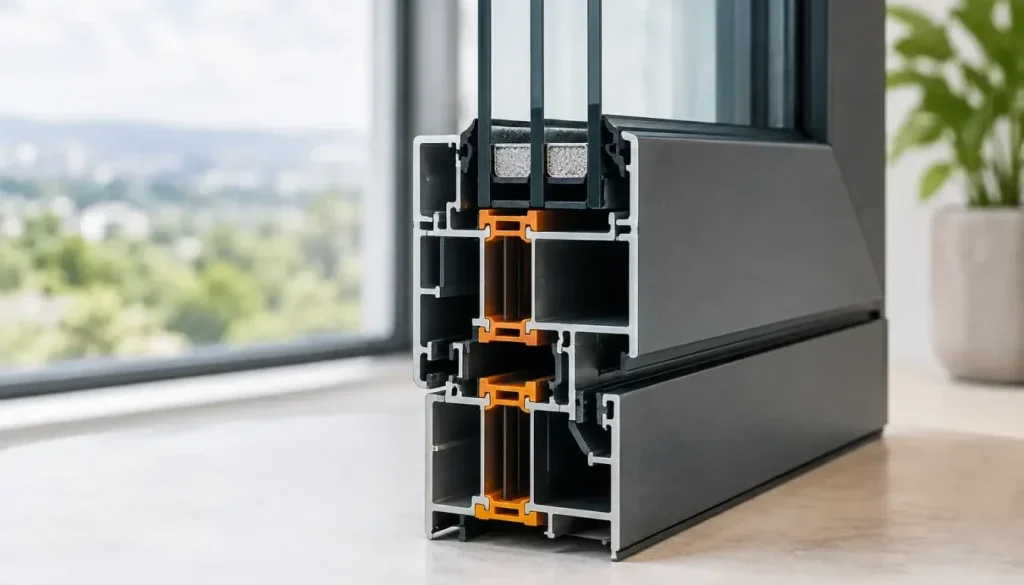
A thermal break is a low-conductivity material inserted between the inner and outer sections of an aluminium profile. In most high-quality aluminium systems, this is a reinforced polyamide strip. It creates a physical separation between the two aluminium sections while keeping the profile structurally sound.
Without this separation, the frame acts as a thermal bridge. During cold weather, internal warmth can pass through the aluminium and escape outside. The interior surface of the frame then becomes colder, which can make rooms feel less comfortable and encourage condensation where warm, moisture-laden indoor air meets that cold surface.
With a thermal break in place, heat has a far more difficult route through the frame. The inner aluminium section stays warmer, the outer section remains more isolated from the room, and the overall window or door can achieve a significantly better thermal result.
This is not an optional finishing detail or a coating applied after fabrication. It is a fundamental part of the aluminium profile design. The thermal break is mechanically joined to the aluminium during profile manufacture, before the frame is cut, assembled and glazed.
Why aluminium needs thermal separation
Aluminium is valued across residential and commercial projects because it is strong, durable, low-maintenance and well suited to large glazed openings. It allows slim frames for bifolding doors, sliding doors, roof lanterns, heritage-style glazing and curtain walling, while retaining the rigidity required for everyday use and wind loading.
Its natural conductivity is the trade-off. A solid, unbroken aluminium frame transfers heat much faster than timber, uPVC or an insulated composite construction. Earlier aluminium windows often had cold internal surfaces, visible condensation and modest thermal performance for precisely this reason.
A thermal break changes the equation. It allows specifiers to retain aluminium’s strength and clean architectural appearance while controlling heat transfer through the frame. The result is a system appropriate for the expectations of modern UK homes, extensions, renovations and commercial buildings.
The phrase “thermally broken” is therefore more meaningful than a marketing label. It identifies a construction method that directly affects how the frame performs in service.
How a thermal break works in practice
Think of a standard aluminium frame as two connected paths: one facing indoors and one facing outdoors. If they are continuous metal, warmth can move across the profile readily. A polyamide thermal break interrupts that path.
Polyamide is a strong engineering material with much lower thermal conductivity than aluminium. It is usually positioned through the central zone of the profile, joining the inner and outer aluminium shells. This arrangement lets the profile resist normal operational forces while reducing the transfer of heat and cold.
The break also supports better control of internal surface temperatures. That matters particularly around doors and large areas of glazing, where occupants are likely to sit, walk or work close to the frame. A warmer internal frame surface reduces the likelihood of cold edges around an otherwise well-performing glazed unit.
The exact performance depends on more than the presence of a thermal break. Its width, profile geometry, gasket design, chamber layout, glass specification, spacer bars and installation all contribute. A wider or more advanced thermal zone can improve performance, but it may also affect profile depth, cost and the available configuration. There is no single thermal-break design that suits every system.
Thermal breaks, U-values and Building Regulations
U-values measure the rate at which heat passes through a building element. Lower values indicate less heat loss. When assessing a window, door or rooflight, the relevant figure is normally the whole-product U-value, not simply the centre-pane value of the glass.
That distinction is essential. High-performance double or triple glazing can have an excellent centre-pane result, but the frame and edge of glass still influence the final figure. A properly designed thermal break helps bring the frame performance closer to that of the glazing, improving the overall result.
For UK projects, thermal performance must be considered alongside the applicable Building Regulations, project type and location. Requirements can vary between replacement work, extensions, new builds and commercial schemes, while planning conditions or a project’s energy strategy may set further expectations.
A stated U-value should always be read carefully. Ask whether it applies to the complete window or door, what size and configuration was tested or calculated, and which glazing build-up was used. A small fixed window will not behave in the same way as a wide sliding door or a multi-panel bifold. Reliable suppliers can explain the basis of their figures and help match a system to the specification.
Condensation: what a thermal break can and cannot solve
Thermally broken aluminium frames are highly effective at reducing frame-related condensation risk, but they cannot remove moisture from a building. Condensation forms when humid air contacts a surface below its dew point. Cooking, showering, drying clothes indoors and limited ventilation can all raise indoor humidity.
By keeping the internal frame warmer, a thermal break makes condensation less likely than it would be on uninsulated aluminium. It is particularly valuable at frame edges, around glazing beads and in areas exposed to external cold.
However, persistent condensation may also point to high internal humidity, inadequate ventilation, cold bridges elsewhere in the structure or a poor installation detail. Trickle ventilation, mechanical extraction where required, sensible heating patterns and correct sealing around the aperture all remain part of the wider solution.
For this reason, a frame should never be judged in isolation. Good glazing performance comes from the product, the glass, the opening detail and the way the building is used.
Where thermal breaks matter most
Every external aluminium window and door benefits from an insulated frame, but the effect is especially relevant in larger or more exposed installations. Bifolding doors and sliding patio doors span substantial openings and often form a major part of an extension’s external envelope. Rooflights and roof lanterns sit at high level, where warm air naturally rises, so frame performance should be considered alongside solar gain and ventilation strategy.
Curtain walling and commercial glazed façades require a more detailed approach. These systems may include pressure plates, caps, transoms, mullions and interfaces with opaque panels or structure. Each component needs to be designed to limit unnecessary thermal bridging while meeting drainage, weathering, structural and fire-performance requirements where applicable.
Heritage-style aluminium systems deserve attention too. Their narrow steel-look lines are a key part of the appeal, yet the visual aim should not mean compromising the thermal standard expected of a modern installation. A well-engineered system balances slender proportions with insulated profile construction.
What to check when specifying a thermally broken system
Start with the complete requirement rather than selecting on appearance alone. The target U-value, opening size, exposure, glazing type, security needs, threshold detail and intended use should all shape the choice of system.
For doors, check that the quoted performance relates to the actual sash arrangement. A single French door, a three-panel bifold and a lift-and-slide door have different frame-to-glass ratios and different hardware demands. For windows, consider whether fixed lights, opening vents and shaped units are all covered by the stated performance data.
Also look beyond insulation. A quality aluminium system should be properly weathered, drained and glazed with the correct gaskets and packers. It should be fabricated accurately, installed square and supported appropriately within the opening. Even the best thermally broken profile cannot compensate for gaps around the perimeter, unsuitable glass or poor site workmanship.
Manufacturing control is valuable here. Factory-fabricated products made to an approved system design provide greater confidence that corner cleats, seals, drainage routes, hardware and glazing preparation have been handled consistently. Rhino Aluminium manufactures made-to-measure aluminium products in Kent and can support trade customers with system and specification guidance for the project at hand.
Is a thermal break always worth having?
For heated internal spaces, yes: a thermally broken frame is the sensible modern choice and is generally essential to achieving the expected level of energy performance. It supports lower heat loss, warmer internal surfaces and a more comfortable finished space.
There are exceptions in unheated outbuildings, certain internal screens or specialist non-insulated applications, where thermal performance is not part of the brief. Even then, the decision should be deliberate. A low initial frame cost can become poor value if the space is later heated, converted or found to suffer from cold surfaces.
When comparing aluminium glazing, ask not only how slim the frame looks, but how the system manages heat through every part of the opening. The right thermal break is rarely the most visible feature of a window or door, yet it is one of the details that helps the finished installation feel as good as it looks.