


Window Condensation Causes and What They Mean
A clear pane at lunchtime can be running with water by breakfast. For installers, developers and homeowners, understanding window condensation causes is the difference between treating a visible symptom and solving the moisture issue behind it. The position of the moisture matters: water on the room side, outside face or between the panes points to very different actions.
Condensation is not automatically a faulty window. It occurs when warm, moisture-laden air meets a surface cold enough for that moisture to turn back into water. However, recurring internal condensation can damage finishes, encourage mould and lead to difficult conversations after installation. A sound diagnosis considers the glazing, frame, ventilation, heating pattern, building fabric and how the room is used.
The main window condensation causes
The most common cause of condensation on the inside of a window is high humidity in the property combined with a cold internal glass surface. Everyday activities produce substantial moisture: cooking, showering, drying washing indoors and even sleeping all add water vapour to the air. In a well-sealed modern home, that moisture has fewer uncontrolled routes to escape.
When the internal surface temperature of glass falls below the air’s dew point, water forms. Single glazing and older double-glazed units are particularly prone to this, but even efficient glazing can show condensation where humidity is unusually high, ventilation is restricted or the heating is switched off for long periods.
The issue is often most noticeable in bedrooms first thing in the morning, bathrooms after showers and kitchens during cooking. These are useful clues. If every room is affected all day, the property may have a wider ventilation or heating issue. If only one room is affected, inspect the room’s extract ventilation, air circulation and moisture-producing activities before blaming the window.
Cold glass and poor thermal performance
Glass is usually the coldest surface in a room, so it is where moisture becomes visible first. That does not mean it is always the source of the problem. Older units may have poor insulating performance, failed perimeter seals or conductive frames that lower internal surface temperatures.
Modern double or triple glazing with low-emissivity glass, appropriate gas filling and warm-edge spacer technology reduces heat loss and raises the temperature of the room-side pane. Thermally broken aluminium frames are equally relevant. Aluminium is strong and durable, but without a properly engineered thermal break it conducts heat readily. A quality system separates the internal and external sections of the profile, helping to reduce cold bridging around the frame.
Specification still depends on the project. Triple glazing can improve thermal performance, but it adds weight and cost, and may not be necessary for every elevation or opening size. The right glass build-up should balance U-value, solar gain, acoustic requirements, frame capability and the design brief.
High indoor humidity and limited ventilation
A home can be warm yet still suffer from condensation if moisture is trapped indoors. New-build properties, recently plastered extensions and heavily refurbished homes deserve particular care because construction moisture can take months to dry out fully.
Background ventilation and extract ventilation should be considered together. Trickle vents can provide controlled background airflow where included in the design, while correctly sized and commissioned kitchen and bathroom extracts remove moisture at source. Keeping internal doors closed while showering or cooking, then running extraction for an adequate period afterwards, prevents damp air from moving through the rest of the property.
For occupants, a hygrometer offers a straightforward reality check. Relative humidity that regularly sits above roughly 60% indicates the indoor air is carrying more moisture than is desirable for comfort and building fabric. It is not a substitute for proper assessment, but it helps identify whether the problem is likely to be environmental rather than a glazing defect.
Restricted airflow around the window
Condensation can develop on otherwise high-performing windows when warm room air cannot reach the glass. Heavy curtains drawn tightly over the opening, closed blinds, deep window boards and furniture placed directly against the frame can create a cold pocket of stagnant air.
This is especially relevant around large sliding doors and full-height glazing. The product may be correctly specified and installed, yet overnight blinds and reduced heating allow the surface temperature to fall. Leaving a small gap around coverings and maintaining modest, consistent background heat can make a practical difference.
Where the condensation appears changes the diagnosis
Before recommending a replacement unit or investigating an installation, establish exactly where the water is forming.
Condensation on the room-side glass
This is the familiar internal condensation most often linked to indoor humidity, low surface temperatures or inadequate ventilation. Check whether extract fans operate properly, whether trickle vents are open where fitted, and whether the room is heated consistently. Also look for local cold bridges around reveals, lintels and poorly insulated perimeter junctions.
If condensation is concentrated around the edge of the glass or frame, a cold bridge may be contributing. This needs a measured response. Improving the window alone may reduce the symptom, but it may not resolve a poorly insulated reveal or an unaddressed ventilation shortfall.
Condensation on the external glass surface
External condensation is often misunderstood. On high-performance glazing, the outer pane can become cold because less internal heat is escaping through the unit. On clear, still nights, the outer surface may cool below the outdoor dew point and mist over in the morning.
In many cases, this is evidence that the glass is insulating effectively, not that it has failed. It usually clears as the external temperature rises. External condensation may be inconvenient where an uninterrupted early-morning view is essential, but it is not generally a defect.
Moisture between the panes
Condensation or a persistent mist between panes is different. It normally indicates that the sealed unit has failed and moisture has entered the cavity. The unit will typically need replacing, even if the frame itself remains sound.
For trade professionals, it is worth recording the condition with photographs and checking the unit markings, age and warranty position before ordering a replacement. Avoid assuming the entire window must be replaced where a correctly sized, compatible sealed unit can restore performance.
Installation details that can affect condensation risk
Window performance does not stop at the frame. A premium unit can be undermined by poor junction detailing, incomplete insulation, gaps around the opening or unsuitable sealing. Conversely, a good installation cannot compensate indefinitely for excessive indoor moisture.
The aim is a continuous thermal and airtight line around the opening, with an installation approach appropriate to the wall construction. Insulated cavity closers, correctly positioned frames and carefully finished internal reveals all help reduce cold surfaces where condensation can develop. External weather sealing must also prevent driven rain ingress without blocking drainage paths designed into the frame.
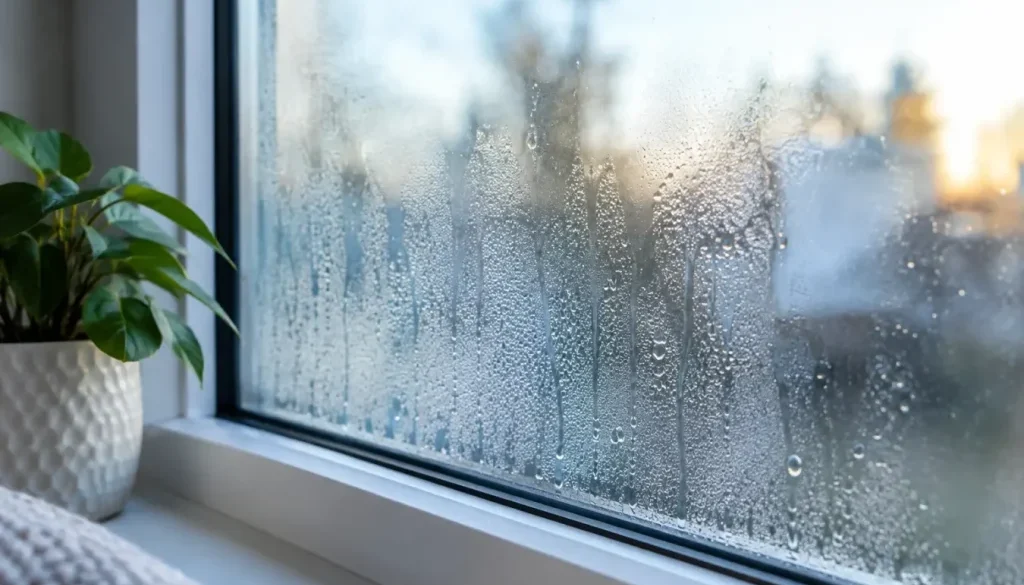
It is also essential to separate condensation from a leak. Condensation usually follows changes in internal humidity and temperature and appears as fine droplets across a surface. Water ingress may be more localised, worsen after wind-driven rain and leave staining around one area of the frame or reveal. These faults require different investigations.
For larger glazed elevations, curtain walling and rooflights, the same principle applies but the detailing is more complex. Thermal continuity, drainage, pressure equalisation and the interface with the roof or façade system all need to be planned before installation. A product’s stated U-value is only one part of whole-opening performance.
A practical route to resolving internal condensation
Start with the room rather than immediately replacing the glass. Confirm that extraction works, clear blocked vents, reduce indoor clothes drying where possible and use pan lids when cooking. Keep background heat reasonably steady during colder weather instead of allowing rooms to cool completely and reheating them sharply.
Next, inspect the window and its surroundings. Look for failed sealed units, damaged gaskets, blocked drainage, visible gaps, cold reveals and condensation patterns around frame edges. A thermal survey can be useful on more complex projects, particularly where a retrofit, extension or large-format glazing has altered the building’s thermal balance.
If replacement is justified, specify the complete system rather than focusing on a single headline figure. The glazing, thermal break, spacer, frame design, opening configuration and installation detail should work together. For projects requiring contemporary sightlines and large openings, factory-fabricated aluminium systems can provide strong thermal performance alongside the rigidity needed for bigger glazed areas.
Rhino Aluminium supplies thermally broken aluminium window and door systems manufactured in Kent for dependable installation and project-specific specification. For trade customers, early discussion of glass, ventilation and opening details helps prevent condensation concerns being passed down the line as an avoidable aftersales issue.
A dry internal pane is not simply a window target. It is the visible result of balanced moisture control, effective ventilation, appropriate heating, sound detailing and a glazing system suited to the building. Assess all five, and the right remedy becomes far clearer.