



Recycled Aluminium Construction Trends in 2026
A premium aluminium sliding door, rooflight or curtain wall system is expected to deliver for decades. It must look precise, resist weather, meet thermal targets and arrive ready for installation. That is why recycled aluminium construction trends matter to UK trade customers: they are changing the questions being asked at specification stage, without changing the requirement for reliable, compliant fabrication.
Aluminium is already central to modern extensions, developments and commercial façades because it is strong, slim and highly durable. Its ability to be recycled repeatedly adds a further consideration for architects, developers and homeowners who want to reduce the embodied impact of a project. The opportunity is real, but it needs to be handled with the same care as any other part of a glazing specification. A recycled-content claim alone does not confirm product quality, carbon performance or suitability for the job.
Why recycled aluminium is moving up the specification list
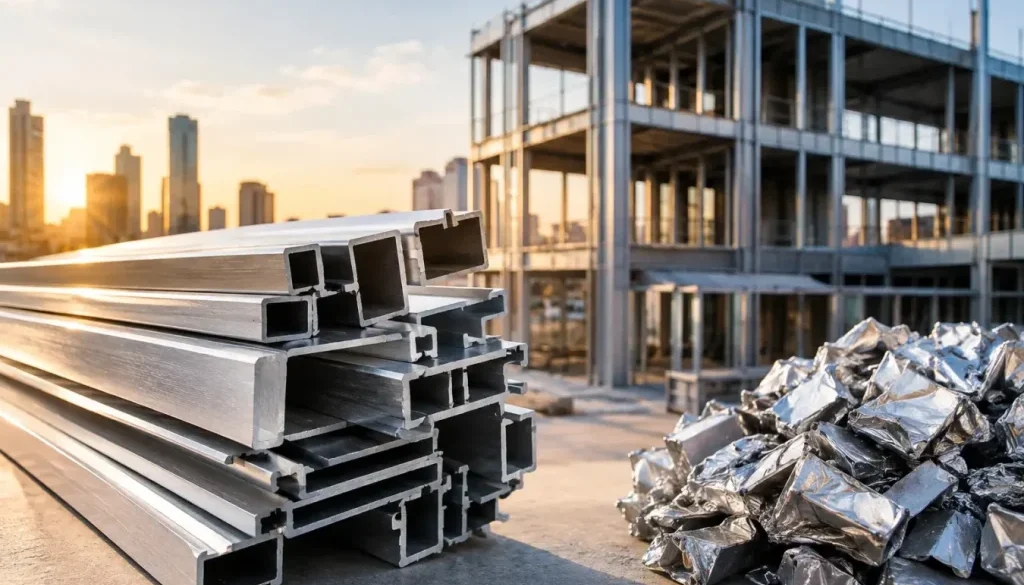
Producing primary aluminium is energy-intensive. Reprocessing aluminium scrap generally requires significantly less energy than making metal from raw materials, which is why the material has a well-established recycling value. In construction, aluminium removed from old windows, doors, façades and other products can re-enter the supply chain when it is collected, sorted and processed correctly.
For project teams, this is increasingly tied to broader carbon reporting and responsible-procurement goals. Developers may be responding to planning expectations, corporate environmental targets or client briefs. Architects are also being asked to consider whole-life impacts earlier, particularly on schemes with extensive glazing, rainscreen or façade packages.
The trend is not simply towards using more recycled metal. It is towards proving what a product contains and understanding its impact in context. That means better scrutiny of declarations, clearer conversations with system suppliers and more attention to a product’s useful life, repairability and eventual recovery.
Recycled aluminium construction trends shaping UK glazing
Better evidence, not broader claims
The strongest shift is from general sustainability language towards documented evidence. A specification may ask for declared recycled content, responsible sourcing information or environmental product data for the system being considered. Requirements differ between projects, so installers should avoid assuming that one supplier statement answers every brief.
Recycled content can also be measured in different ways. Post-consumer scrap, such as aluminium recovered from end-of-life building products, is not the same as pre-consumer process scrap from manufacturing. Both can be valuable inputs, but they should not be presented as identical. Where a project has a specific target, ask how the figure has been calculated and which parts of the finished system it covers.
This matters particularly with glazed products. The aluminium profile is only one element of a completed window, door or curtain wall assembly. Glass, thermal breaks, hardware, gaskets, panels and packaging all contribute to the finished product’s environmental profile.
Longer service life is part of the carbon calculation
A high recycled content is beneficial only if the finished product performs as intended. Poorly specified doors that require early replacement, or façade components that create avoidable maintenance issues, undermine the value of the material choice.
For aluminium glazing, this brings established performance factors back into focus: profile design, drainage, powder-coat quality, hardware selection, glazing make-up, correct installation and planned maintenance. A durable frame with a well-applied finish can retain its appearance and function for many years. At the end of its service life, aluminium’s retained value can also make recovery more commercially viable than materials with less established recycling routes.
The practical lesson is straightforward. Specify for longevity first, then compare credible environmental information between systems that meet the same performance requirement.
Circular design is affecting detailing choices
Designers are increasingly considering what happens when a building is refurbished or dismantled. This does not mean every window needs to be designed for immediate disassembly. It does mean avoiding unnecessary complexity where practical and considering whether components can be maintained or replaced without discarding an entire assembly.
For example, accessible hardware and sensible glazing details can support repair over replacement. Clear records of installed systems, finishes and glass specifications also make later maintenance and recovery easier. On larger schemes, segregating aluminium offcuts during installation can prevent valuable material being mixed into general site waste.
There are trade-offs. Bespoke shaped glazing, oversized panels and highly detailed architectural features may be exactly what a project needs, but can require more material, more specialist processing or more complex future removal. The answer is not to avoid ambitious design. It is to make informed choices and allow for these requirements at design stage rather than treating them as an afterthought.
Local manufacturing and logistics are being examined more closely
Embodied carbon is not solely about the metal’s origin, but transport and production routes are receiving more attention. British fabrication can give installers and developers a clearer view of lead times, quality checks and product support, while reducing the need to hold large quantities of imported finished units on site.
Local manufacture is not an automatic environmental claim. Aluminium billet, systems, glass and hardware may each have international supply chains. However, factory-controlled fabrication can help minimise errors, reduce remake risk and support more efficient delivery planning. For trade customers, dependable scheduling also has a practical value: fewer last-minute changes and less time spent managing incomplete openings on site.
Thermal performance remains non-negotiable
There is no benefit in selecting a lower-impact material route if the resulting window or door does not satisfy the building’s energy strategy. Recycled aluminium profiles can deliver the same functional performance as profiles made with primary metal when they are produced to the required alloy and quality standards. The key issue is the performance of the complete system, not whether recycled content has been added to a marketing line.
For domestic projects, installers should continue to check the required U-value, glass specification, air permeability, water tightness and wind loading. For commercial façades, project-specific calculations and testing requirements are likely to be more demanding. Thermal breaks, insulated panels and the glass unit will have a significant influence on the final result.
Security and compliance must receive the same attention. PAS 24 requirements, safety glazing, fire performance where relevant, smoke ventilation and structural loading cannot be traded away for a recycled-content target. Good specification treats environmental evidence as one requirement alongside safety, thermal performance and durability.
What installers and developers should ask before ordering
A clear technical conversation early in the project can prevent late substitutions and avoidable delays. When comparing aluminium systems, ask the supplier for the specific evidence available for that product range rather than relying on a company-wide statement. Confirm whether recycled-content information applies to the extrusion, the overall system or a particular batch.
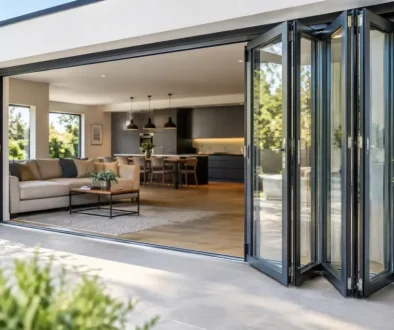
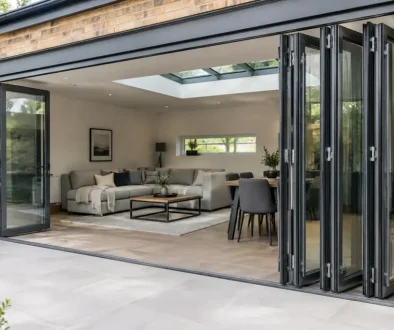
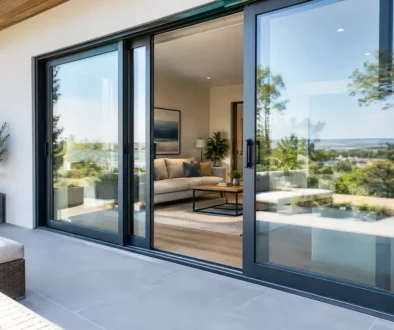
It is also worth checking whether the proposed finish, hardware and glazing configuration have implications for the stated performance. A bifolding door on an exposed elevation, for instance, should be selected around its size, threshold, drainage and wind exposure before its environmental credentials are compared. The same applies to large sliding doors, rooflights and curtain walling.
For projects with formal sustainability targets, put the requirement into the order documentation. Specify the documents needed, when they are needed and whether substitutions are acceptable. This gives the fabricator time to check availability and manufacture the correct product, rather than trying to assemble evidence after installation has started.
The risk of chasing a single percentage
A high recycled-content percentage can sound decisive, but it does not tell the whole story. Supply availability varies, alloy requirements vary, and different calculation methods can produce figures that are difficult to compare directly. A figure that looks attractive on paper may cover only the aluminium extrusion and not the window, door or façade as installed.
There is also a risk of overlooking service life. A well-engineered aluminium system with tested weather performance, efficient glazing and a long usable life may represent a better project decision than a less suitable product selected purely for one material statistic. This is especially relevant for high-traffic entrances, coastal locations, exposed sites and large-format glazing where workmanship and engineering are critical.
The sensible approach is to compare like with like. Establish the required performance first, request consistent evidence from shortlisted suppliers, then assess recycled content and environmental data alongside cost, lead time, warranty and installation practicality.
Turning the trend into a workable specification
For most UK projects, recycled aluminium should be treated as a specification conversation rather than a separate product category. The frame still needs to suit the opening, the building regulations, the architectural intent and the installation programme. The difference is that responsible sourcing and end-of-life potential are now becoming part of the decision as well.
At Rhino Aluminium, factory-controlled production in Kent gives trade customers a direct route to discuss system choice, technical requirements and fabrication before units reach site. That support is particularly useful where a project combines demanding performance targets with bespoke sizes, colours or glazing details.
The best next step is a practical one: bring the sustainability brief to the same early conversation as U-values, security, sightlines and lead times. When those requirements are considered together, recycled aluminium can support a better-built project rather than becoming another box to tick.