

Aluminium Versus uPVC: Which Frames Win?
A wide opening can make or break an extension, and frame choice determines far more than its appearance. The aluminium versus uPVC decision affects glass sizes, sightlines, thermal targets, security specification, installation detail and the long-term impression a project leaves with its owner.
For installers, builders and developers, there is no universal winner. uPVC remains a sensible option for many replacement-window programmes and cost-conscious schemes. Aluminium earns its place where scale, finer frames, colour choice and architectural performance matter. The right answer starts with the opening, the building and the brief, rather than a simple price comparison.
Aluminium versus uPVC: the practical difference
Both materials can produce compliant, secure and energy-efficient windows and doors when the system, glass unit and installation are properly specified. The difference is in how they achieve that result.
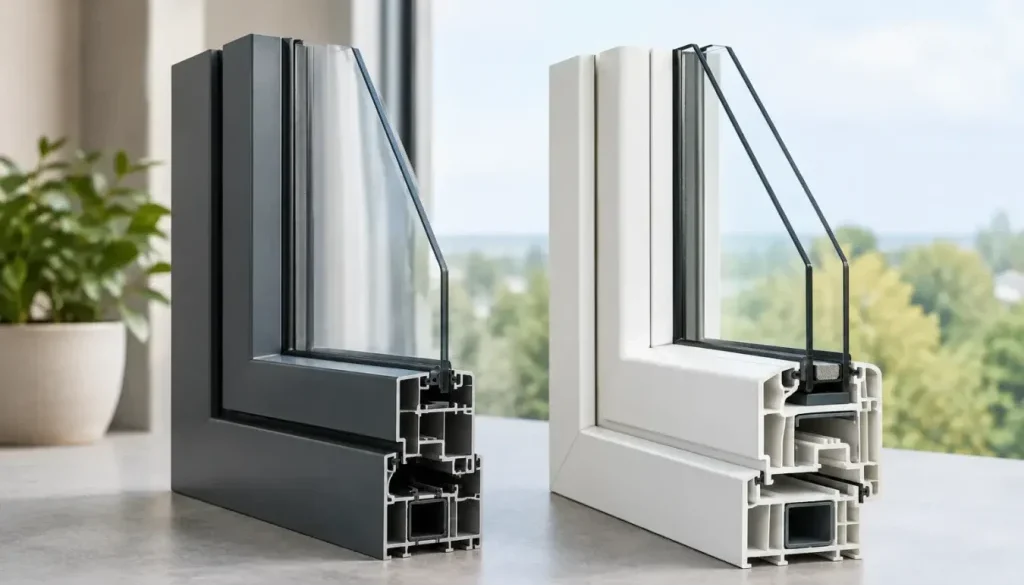
uPVC is a multi-chamber plastic profile. Its internal chambers help reduce heat transfer, which is why it has long been a strong choice for domestic windows. It is relatively economical to manufacture, familiar to fitters and well suited to standard-sized openings.
Aluminium is much stronger for its weight. Modern thermally broken aluminium profiles use an insulating barrier between the inner and outer sections, reducing the direct transfer of heat through the metal. That strength allows slimmer profiles and supports larger panes of glass without making the frame visually heavy.
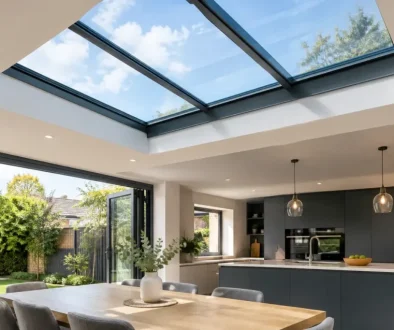
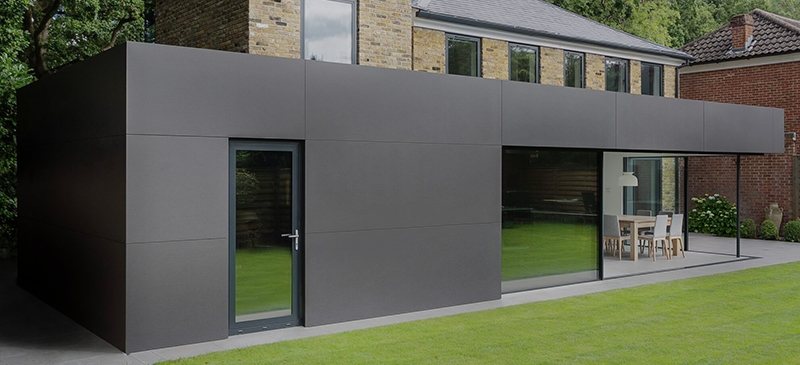
This matters most when the design calls for a wide bifolding door, a large sliding door, a rooflight, a shaped glazed screen or a contemporary window with minimal visible framing. A material that carries more glass with less frame changes the character of the whole elevation.
Sightlines and maximum sizes
For premium extensions and new builds, this is often the deciding factor. Aluminium sections can be substantially slimmer than comparable uPVC profiles while still carrying demanding sash weights. The result is more daylight, clearer views and a sharper, more architectural finish.
Large-format glazing is not simply an aesthetic choice. It can reduce the number of mullions and transoms in a façade, create a better connection to a garden or terrace, and give architects greater freedom with opening layouts. Sliding doors in particular benefit from aluminium’s stiffness, as wide glass panels need frames that resist deflection and continue to operate accurately over time.
uPVC has its limits at larger sizes. Reinforcement can increase its capability, but it also adds bulk. On a modest casement window this may not concern the client. On a two-storey glazed elevation or a wide rear extension, it can be the difference between an ordinary result and a considered one.
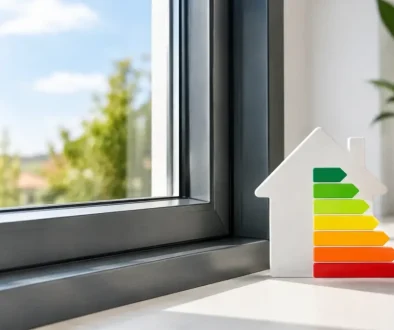
Thermal performance is about the complete specification
The old assumption that uPVC is automatically warmer than aluminium is no longer useful. Early aluminium frames could conduct heat readily, but current thermally broken systems are designed to meet demanding domestic performance requirements.
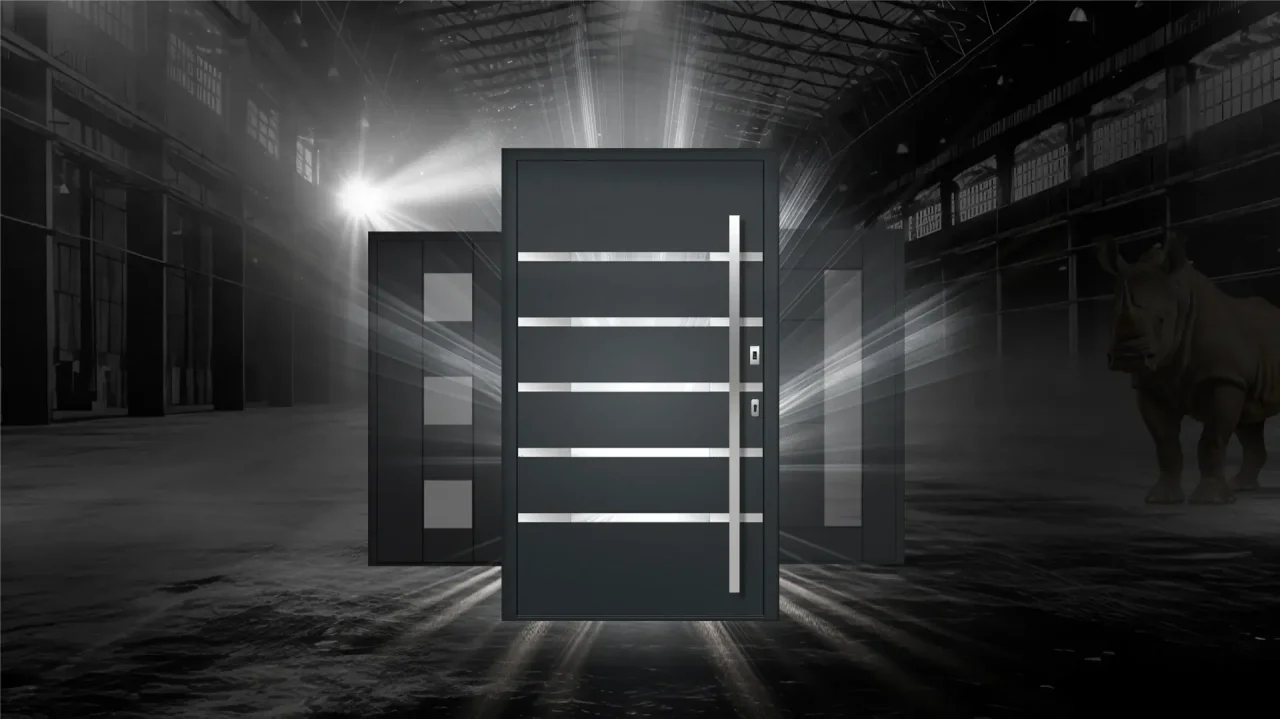
A well-specified aluminium window or door can achieve strong whole-unit U-values, commonly in the region required for modern UK projects, depending on the profile, glazing, spacer bars and configuration. Rhino Aluminium systems can be specified with U-values from 1.2 to 1.4 W/m²K in appropriate configurations. uPVC can also achieve excellent figures, particularly with triple glazing and deeper multi-chamber profiles.
The key point is that a quoted U-value should be like-for-like. Ask whether it applies to the complete window or door, not the centre pane alone. Check the glass specification, opening type, panel dimensions and whether the stated figure is calculated or tested. A large sliding door, for example, will not perform exactly like a small fixed light using the same glass.
Installation also matters. Poor perimeter sealing, inadequate cavity closers or an ill-considered threshold detail can undermine a high-performing frame. For trade customers, early coordination between the window supplier, builder and designer prevents expensive remedial work later.
Security and compliance should not be assumed
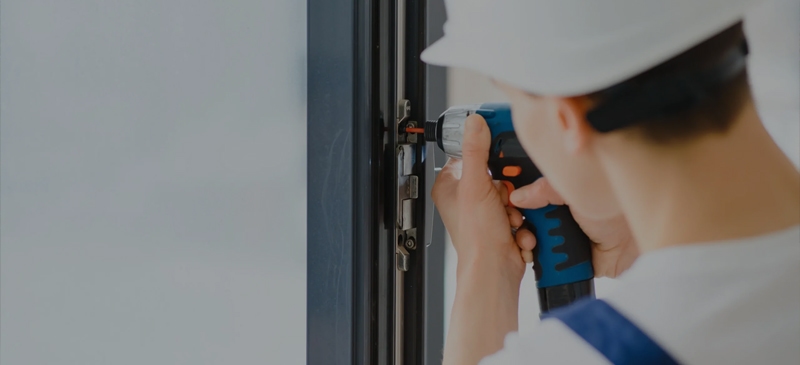
Neither aluminium nor uPVC is secure simply because of the material named on the quotation. Security comes from the complete assembly: profile design, glazing method, hinges, locking points, cylinder, handle, hardware reinforcement and fixing into the structure.
For new homes and many higher-value refurbishment projects, PAS 24 is a useful benchmark. It demonstrates that the specified product has been tested against a defined attack standard. Where required, ensure the exact configuration being ordered is covered. A test certificate for one style of window does not automatically apply to every size, lock option or door arrangement.
Aluminium’s inherent strength is valuable for large doors and exposed locations, but it does not remove the need for correct hardware selection. Similarly, a good uPVC system with suitable reinforcement and quality locks can provide very capable domestic security. The practical question is whether the chosen system meets the project requirement without compromising the intended design.
Colour, finish and design freedom
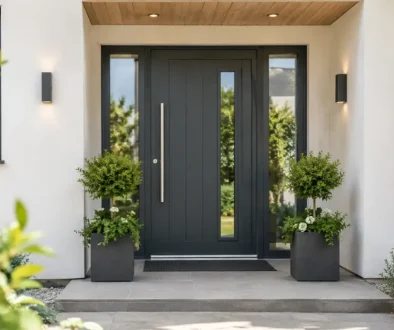
White uPVC remains popular because it is neat, familiar and competitively priced. Foiled finishes have widened the choice, bringing anthracite grey, wood-effect and other colours into reach. However, the palette and surface options are more constrained than aluminium, especially where a project needs a particular architectural colour.
Aluminium offers a major advantage here. Powder coating provides durable colour finishes across an extensive range, including more than 5,000 RAL choices where a bespoke match is needed. Dual-colour frames are also straightforward, allowing a restrained internal finish with a bolder external façade treatment.
This flexibility is particularly useful on developments with planning conditions, heritage-influenced schemes, commercial frontages and homes where windows, doors, rooflights and curtain walling need to read as one coordinated system. Aluminium is also well suited to steel-look designs, where slender lines are central to the brief.
Cost: look beyond the initial frame price
For standard replacement windows, uPVC will usually be the lower-cost route. It can make sound commercial sense where openings are conventional, the visual ambition is straightforward and budgets are tightly controlled.
Aluminium commands a higher initial cost, particularly once larger glass units, specialist hardware or bespoke shapes are involved. Yet price should be assessed in the context of the project’s outcome. If aluminium permits a wider opening, removes intermediate framing, supports a desirable door configuration or lifts the perceived value of an extension, the additional spend may be justified.
There is also the cost of getting the specification wrong. Choosing a less capable material to save money at quotation stage can lead to compromised sightlines, restricted panel sizes or a late redesign. For installers, clear discussions on design intent and maximum dimensions before ordering are more valuable than a headline frame price.
Maintenance, weathering and service life
Both materials are low maintenance compared with timber. They need periodic cleaning, clear drainage paths and routine checks of moving hardware. Doors with high daily use should have rollers, hinges and locks inspected as part of normal aftercare.
uPVC does not need painting, but lighter colours can become marked and darker foils may absorb more heat. Quality varies significantly between systems, and budget profiles can lose their crisp appearance over extended exposure. Aluminium powder-coated finishes are highly durable and retain a clean, precise appearance when cared for correctly. The material is dimensionally stable, an advantage for large door panels facing strong sunlight.
For a coastal, heavily exposed or high-traffic application, discuss the site conditions early. Finish grade, hardware specification and drainage details should all reflect the environment rather than being treated as standard extras.
When uPVC is the sensible choice
uPVC is a practical fit for conventional replacement windows, particularly where budget is a priority and the openings are modest. It offers good insulation, dependable security and familiar installation methods. On a whole-house refurbishment with many standard windows, it can provide a strong result without stretching the budget unnecessarily.
It may also be the preferred choice where matching existing uPVC frames matters more than introducing a new architectural language. The best specification is not always the most expensive one. It is the one that meets the performance requirement and suits the property.
When aluminium is worth specifying
Aluminium is the stronger choice when the project relies on big glazed openings, narrow sightlines, premium colour finishes or a long-lasting contemporary appearance. It is particularly effective for bifolding doors, sliding doors, pivot doors, roof lanterns, flat rooflights, heritage-style glazing and façades where the frame must work hard without dominating the glass.
For developers and contractors, factory-controlled fabrication and clear technical documentation are equally important. Confirm manufacturing lead times, guarantee cover, tested performance and support for unusual details before committing the design. These are the checks that protect programme certainty as well as product quality.
The most useful way to approach aluminium versus uPVC is to start with the opening you want to create, not the material you assume you need. Set the required sizes, energy target, security standard, finish and budget, then specify the frame system that delivers all five without compromise where it counts.