

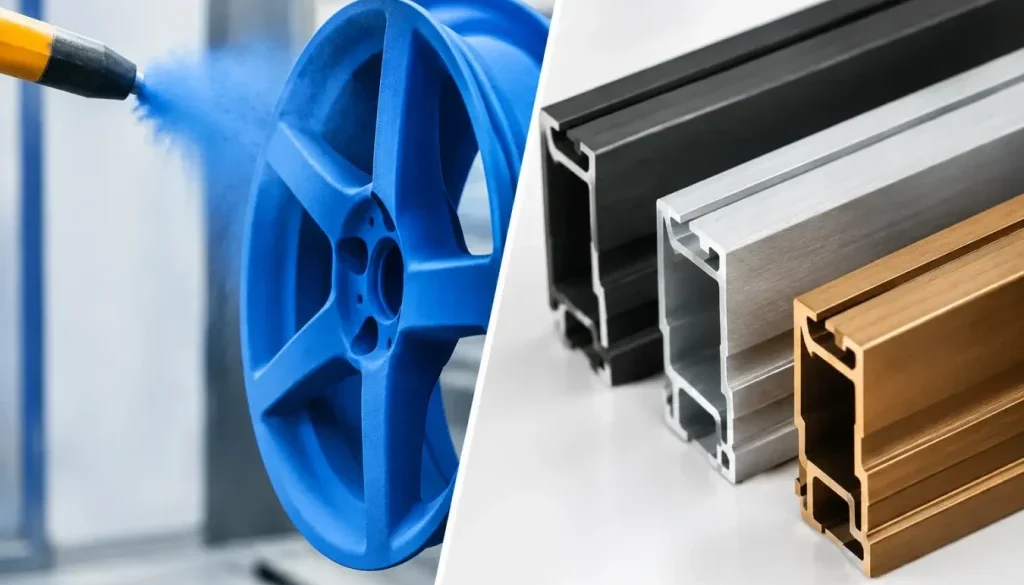
Powder Coating Versus Anodising Compared
A black aluminium sliding door facing the sea, a bronze heritage window on a conservation-led renovation and a bright white bifold on a family extension may all begin with the same base material. Their long-term appearance, however, depends heavily on the finish specified. The powder coating versus anodising decision is not simply about colour. It affects visual character, repairability, weathering expectations, cleaning requirements and how confidently the finished aluminium will suit the project.
For UK windows, doors, rooflights and façade systems, powder coating is the more familiar choice. Anodising remains an excellent architectural finish in the right setting, particularly where a metallic appearance is central to the design. The best option depends on the exposure, required colour, profile geometry, budget and the level of consistency expected across the installation.
Powder coating versus anodising: the key difference
Powder coating adds a coloured protective layer to the aluminium. The profiles are carefully pre-treated, coated with electrostatically charged powder and then cured in an oven. The result is a continuous finish available in an exceptionally broad range of colours, textures and gloss levels.
Anodising works differently. It is an electrochemical process that thickens the aluminium’s natural oxide layer, creating a hard, integral surface rather than applying a separate coating. The aluminium can then be left in a natural silver tone or dyed to produce shades such as bronze, black, champagne or gold.
That difference explains much of the practical choice. Powder coating gives architects, installers and homeowners far more freedom over colour and surface texture. Anodising preserves a distinctly metallic, architectural finish, but the underlying aluminium and the way it reflects light remain more visible.
Why powder coating is the standard choice for doors and windows
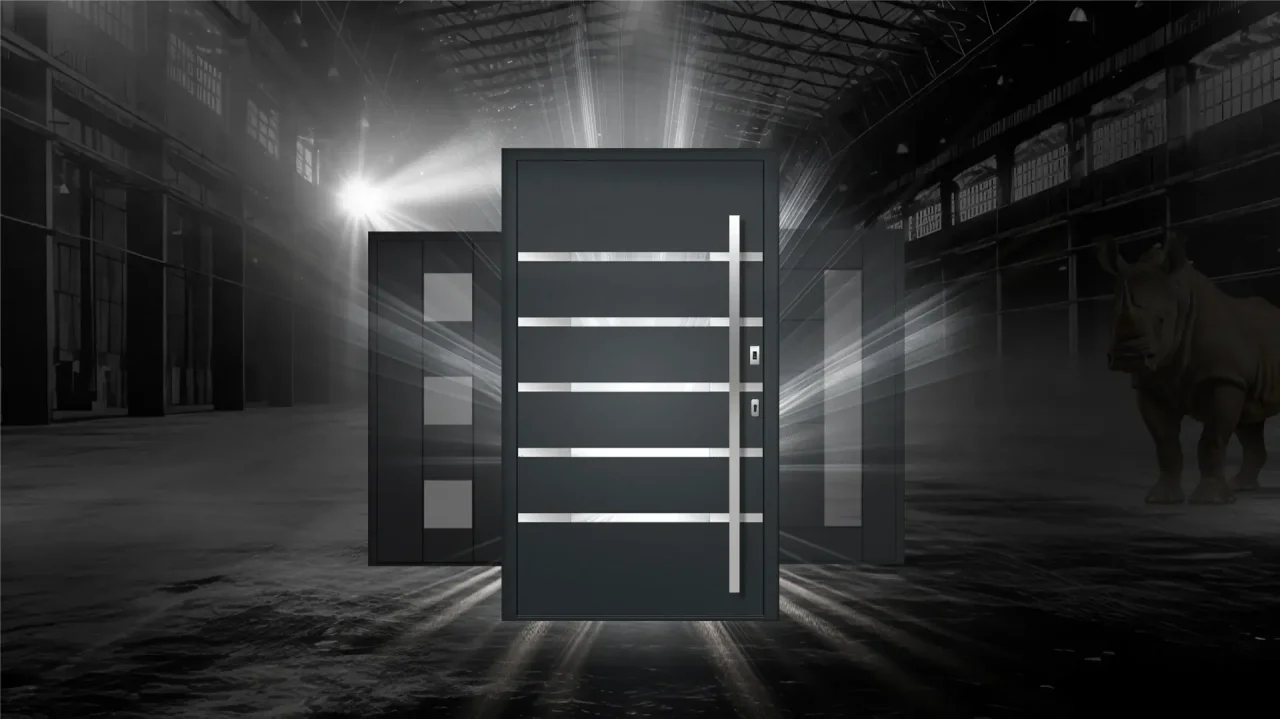
Powder-coated aluminium suits the wide design brief of modern UK residential and commercial projects. It can match almost any RAL colour, with Rhino Aluminium offering more than 5,000 RAL colour choices across its product range. Matte anthracite grey, fine-textured black, soft heritage green and contemporary metallic finishes are all achievable without changing the underlying system.
This flexibility matters on site. A developer may need doors, windows, curtain walling, roof lanterns and flashings to follow a coordinated palette. An installer may be replacing one element of an existing scheme. Powder coating makes close colour matching much more straightforward than anodising.
It also provides practical options for the surface itself. Fine-textured coatings are popular because they reduce the visibility of fingerprints and minor handling marks. Matte finishes create a quieter, more architectural look, while gloss levels can be selected to complement period detailing or a sharper contemporary elevation.
A quality powder-coated finish performs very well outdoors when it is correctly specified, applied over thorough pre-treatment and maintained properly. For coastal, high-pollution or particularly exposed sites, the coating grade and pre-treatment process should be selected for that environment rather than treated as an afterthought. Not every black powder coat is the same, and a low-cost generic specification is not automatically suitable for a seafront property.
The limits of powder coating
Because powder coating is a surface layer, sharp impact can chip or scratch it. Care during fabrication, transport, installation and follow-on trades is therefore essential. Small damage can often be touched in, but a repair will rarely be invisible at close range, particularly on metallic, satin or highly textured finishes.
Profile design also matters. Poor drainage, trapped debris and persistent moisture around joints can shorten the life of any finish. The coating does not compensate for inadequate detailing, incompatible fixings or poor cleaning practice.
Where anodising has the advantage
Anodising has a distinctive appearance that powder coating cannot fully reproduce. Light interacts with the metal rather than sitting on top of an opaque film, giving anodised aluminium depth and a refined metallic character. It is particularly well suited to commercial façades, premium entrance screens and projects where a natural aluminium, bronze or dark metallic finish is part of the architectural intent.
The anodic layer is hard and closely bonded to the aluminium. It will not peel in the way a separate coating can, and minor surface abrasion may be less visually disruptive on some finishes. This makes it attractive for frequently handled architectural components and certain high-traffic commercial environments.
However, anodising is less forgiving of variations in the base metal. Different extrusion batches, machining marks, welds and mixed aluminium components can show through more readily. Even when profiles are processed together, subtle shade variation may be noticeable under changing daylight. On a large glazed elevation, that is a detail worth discussing before manufacture begins.
Anodised aluminium is also more restricted in colour. While modern processes offer a useful selection of tones, the palette does not compete with powder coating. If the project calls for a precise RAL shade, a dual-colour arrangement or a close match to brickwork, cladding or existing frames, powder coating is usually the practical route.
The limits of anodising
Anodising is not automatically the superior finish simply because it is integral to the metal. Its performance still depends on the correct anodic thickness, suitable alloy and careful processing. Contamination from site materials, mortar, cement, aggressive cleaning chemicals and run-off from adjacent metals can mark the surface.
Repairs are another consideration. Deep scratches, dents or local staining cannot normally be blended away on site to recreate the original anodised appearance. Replacing the affected component may be the only acceptable answer where visual uniformity is critical.
Durability depends on specification, not just finish type
Both finishes can deliver lasting performance on aluminium windows and doors. The more useful question is whether the finish specification fits the building and its surroundings.
A sheltered house in inland Kent has very different demands from a coastal home in Cornwall, an urban flat beside a busy road or a tall building with difficult access for cleaning. Salt deposits, airborne pollutants and prolonged wetting all increase the need for a higher-grade finish, well-designed drainage and a realistic maintenance plan.
For powder coating, ask about the coating system, pre-treatment, finish grade and suitability for the site exposure. For anodising, confirm the anodic thickness, intended colour range and whether all visible components will be processed to maintain the closest possible appearance. Where relevant, recognised quality schemes such as Qualicoat for powder coating and Qualanod for anodising can provide additional assurance that the finishing process is controlled.
The aluminium system itself must also be right. Thermal performance, weather sealing, drainage paths, glazing specification, security hardware and fabrication quality are every bit as important as the visible finish. A premium coating cannot rescue an incorrectly fabricated frame.
Maintenance and cleaning on completed projects
Neither powder-coated nor anodised aluminium should be left entirely unattended. Regular cleaning removes grime, salt and pollutants before they can build up, particularly around sills, drainage channels, handles and sheltered corners.
In most cases, warm water, a mild pH-neutral detergent and a soft cloth are sufficient. Rinse clean and avoid abrasive pads, strong solvents, acidic brick-cleaning residues and aggressive alkaline products. Installers should also protect frames while render, mortar, silicone, plaster and landscaping works are being completed. Construction contamination is a common cause of finish damage that is wrongly blamed on the manufacturer.
Cleaning frequency should increase for coastal locations, city sites and buildings close to industrial activity. It is a small maintenance task that protects appearance and helps identify accidental damage early.
How to choose for your project
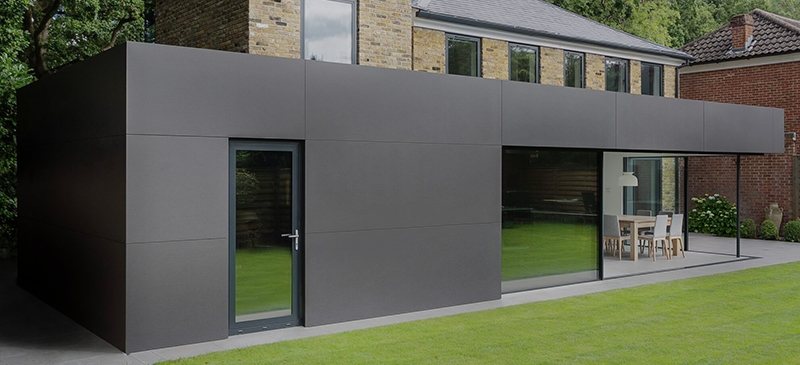
Choose powder coating when colour freedom, coordinated detailing and a broad choice of textures are priorities. It is the natural answer for most aluminium bifolds, sliding doors, front doors, windows and rooflights, especially where homeowners want a specific RAL shade inside, outside or both.
Choose anodising when the project calls for an authentic metallic surface and the design team accepts its more limited palette and potential for visible base-metal variation. It can be a strong choice for carefully detailed commercial work and high-end architectural schemes where that material character is intentional.
For exposed projects, do not choose on appearance alone. Provide the fabricator with the site location, proximity to the coast, elevation, cleaning access and surrounding materials. This allows the finish, system and detailing to be specified together rather than making a costly decision after the profiles are already in production.
A finish should support the building for years, not just look right on handover day. When colour, exposure and maintenance are discussed early, the aluminium can retain the crisp, reliable appearance the project was designed to achieve.