




How to Prevent Window Condensation at Home
Condensation on the room-side of a window is rarely just a window problem. It is a visible sign that warm, moisture-laden indoor air is meeting a colder surface. Knowing how to prevent window condensation means managing both sides of that equation: reduce excess moisture in the property and keep internal glass and frames warmer through sound specification, installation and day-to-day use.
For installers, developers and homeowners, the aim is not simply clearer glass on a cold morning. Better moisture control protects finishes, reduces the risk of mould and helps a well-insulated home perform as intended.
Why window condensation happens
Air always contains some water vapour. Everyday living adds a surprising amount: cooking, showering, drying clothes indoors, boiling a kettle and even breathing all raise humidity. When that warm air reaches a surface below its dew point, the vapour changes back into water droplets.
Windows are often the first place this appears because glass is usually cooler than insulated walls. Older single glazing, poorly performing double glazing and cold frame edges are particularly vulnerable. However, condensation can still occur on modern, thermally efficient glazing if humidity is high enough or ventilation is restricted.
A useful rule is to identify where the moisture sits. Condensation on the inside face of the glass points to indoor humidity, low surface temperatures or both. Moisture between panes indicates a failed sealed unit and requires replacement. Condensation on the outside face of high-performance glazing can be normal: it shows that the outer pane is staying cool because less heat is escaping from the room. It will usually clear as the external air warms.
How to prevent window condensation: start with ventilation
The most effective first step is to let moisture leave the building before it reaches the glazing. This does not mean leaving windows wide open all day in winter. It means providing controlled, consistent airflow where moisture is produced.
Use extractor fans during cooking and bathing, then leave them running for a suitable period afterwards. A fan that vents outside is far more effective than one that simply recirculates air. Keep kitchen lids on pans where practical, and avoid drying laundry in occupied rooms. If indoor drying cannot be avoided, use a well-ventilated space with the door closed and an extractor or dehumidifier operating.
Background ventilators should be kept open where they are part of the ventilation strategy. Closing trickle vents may feel like an easy way to reduce draughts or outside noise, but it can trap humid air in the home. For refurbished properties with upgraded windows and doors, this matters even more: improving airtightness without considering ventilation can increase condensation risk.
Purge ventilation also has a role. Opening windows for a short period after a shower, after cooking or first thing in the morning can quickly replace humid air. In homes with mechanical extract ventilation or mechanical ventilation with heat recovery, systems should be correctly commissioned, maintained and used as designed rather than switched off permanently.
Keep the glass warmer with effective glazing
Ventilation addresses the moisture in the air. The other part of the solution is reducing cold internal surfaces. Quality double or triple glazing with a low-emissivity coating, insulated spacer bars and correctly specified gas-filled units helps maintain a higher internal pane temperature.
For aluminium windows, thermal breaks are essential. Aluminium is strong, slim and highly durable, but it is naturally conductive. A properly designed thermally broken system separates the internal and external sections of the frame with an insulating barrier, significantly improving thermal performance and reducing the chance of cold spots around the perimeter.
U-values should be considered as part of the whole window or door, not just the centre pane. The frame, glass specification, spacer bar, opening configuration and installation all affect the finished result. A lower U-value generally reduces heat loss, but it does not remove the need for appropriate ventilation. Specifying premium glazing while allowing moisture to build up indoors simply moves the problem to the coldest available surface.
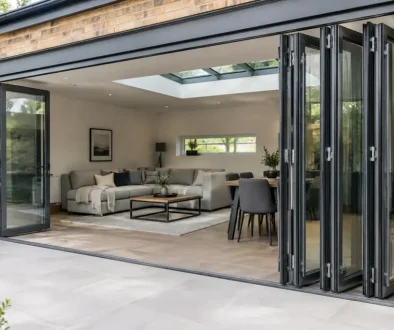
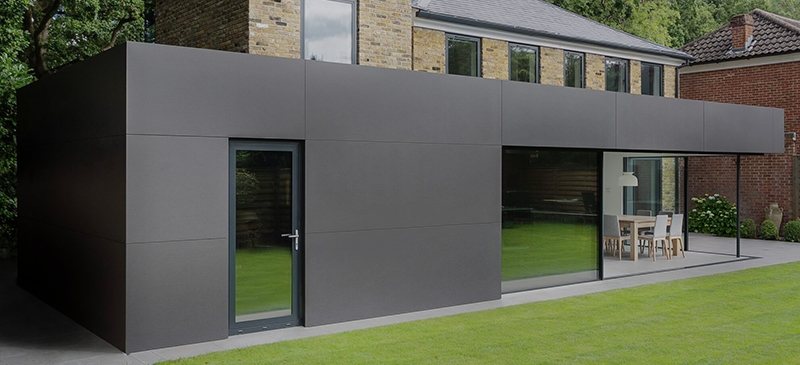
Large-format sliding doors, bifolds, rooflights and roof lanterns deserve particular attention. They can transform a kitchen extension with daylight and views, yet their position near cooking and dining areas means ventilation and glass specification need to be considered early. Roof glazing can also see greater exposure to night-sky cooling, so a project-specific specification is preferable to a one-size-fits-all approach.
Maintain steady, sensible heating
Intermittent heating can make condensation worse. A room allowed to become very cold overnight will have colder glass, frames and surrounding reveals in the morning – exactly when indoor humidity is often at its highest. Maintaining a steady background temperature is usually more effective than heating a cold room rapidly for short periods.
This does not mean overheating the house. The right setting depends on insulation levels, occupancy, heating system and how each room is used. Bedrooms, kitchens and bathrooms often need different approaches. Keep internal doors closed during showering or cooking where possible, so humid air is not released across cooler rooms.
Avoid placing heavy furniture tight against external walls or covering radiators with long curtains. Both can restrict warm air circulation and create local cold zones. Curtains and blinds should also be opened during the day where possible, allowing warmer room air to circulate against the glazing.
Check the installation, not just the product
Even an excellent window can underperform if it is fitted poorly. Gaps around the frame, incomplete insulation at reveals, unsuitable sealants and bridging between internal and external elements can create cold surfaces that attract moisture. Water may then form on plaster, window boards or frame edges rather than the centre of the glass.
For trade professionals, this is why accurate surveys, correct packers, perimeter sealing and continuity of insulation are not minor finishing details. They are central to thermal performance. New-build and extension projects should also coordinate window installation with cavity closers, insulation, vapour control layers and ventilation provisions before finishes conceal the junctions.
If condensation has appeared after replacement windows are installed, do not assume the new glazing is faulty. Tighter windows may simply be revealing a pre-existing ventilation issue that older, draughtier units masked. Equally, do not dismiss persistent moisture around frames. Check drainage paths, seals, opening lights and the quality of the installation, particularly where staining, mould or damp patches are present.
Measure humidity before making assumptions
A small digital hygrometer is an inexpensive and useful diagnostic tool. Relative humidity varies with temperature, but sustained readings above roughly 60% in heated rooms suggest that additional moisture control may be needed. Kitchens and bathrooms will rise temporarily, so assess patterns over several days rather than reacting to one reading.
A dehumidifier can be a practical short-term or room-specific solution, especially during drying, decorating or the first occupancy period of a new build. It should not be used as a substitute for extraction and background ventilation. Where moisture is persistent, investigate the cause: a leaking pipe, inadequate extractor, blocked vent, overcrowded occupancy or a building fabric issue may be contributing.
Newly plastered or screeded buildings require extra patience. Construction moisture can take months to leave the structure, and the risk is greater when a property is heated but poorly ventilated. Follow the drying programme, ventilate regularly and avoid sealing the building up before internal moisture levels have reduced.
When condensation needs professional attention
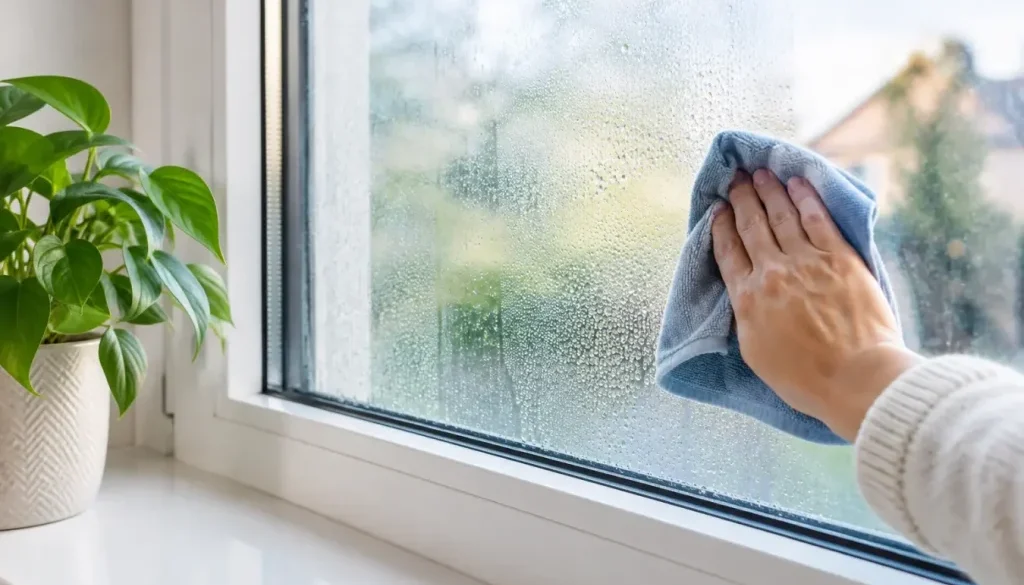
Wipe away routine surface condensation promptly with a dry cloth and monitor whether changes to ventilation and heating improve the situation. But seek professional advice where moisture is trapped inside a sealed unit, black mould is recurring, timber reveals are softening, or water is collecting in quantities that damage finishes.
For planned replacements, extensions or large glazed openings, involve the window supplier and installer early. Rhino Aluminium manufactures thermally efficient aluminium systems for projects where glazing performance, accurate fabrication and compliant installation details need to work together. The right system should be selected for the building, location and intended use, not only for its sightlines or colour.
Clear glass is the result of a balanced home: well-specified windows, warm internal surfaces and a reliable route for everyday moisture to escape. Get those fundamentals right at design stage and maintain them after handover, and condensation becomes far easier to control.