



Preventing Door Condensation: What Works
A glazed door can look perfectly specified in summer, then show beads of water across the inside pane on the first cold morning of winter. For installers, developers and homeowners, preventing door condensation is rarely about one quick fix. It comes down to how the door, the room and the building’s ventilation strategy work together.
Condensation is common in UK homes because warm indoor air holds moisture. When that air reaches a surface colder than its dew point, the moisture turns to water. Large areas of glazing naturally make this more noticeable, particularly on north-facing elevations, in new extensions and in rooms where drying clothes, cooking or showering add moisture to the air.
The key is to identify where the moisture is forming before deciding what needs to change. A better door can make a major difference, but even a high-performing system cannot compensate for persistent high humidity or blocked background ventilation.
Why door condensation happens
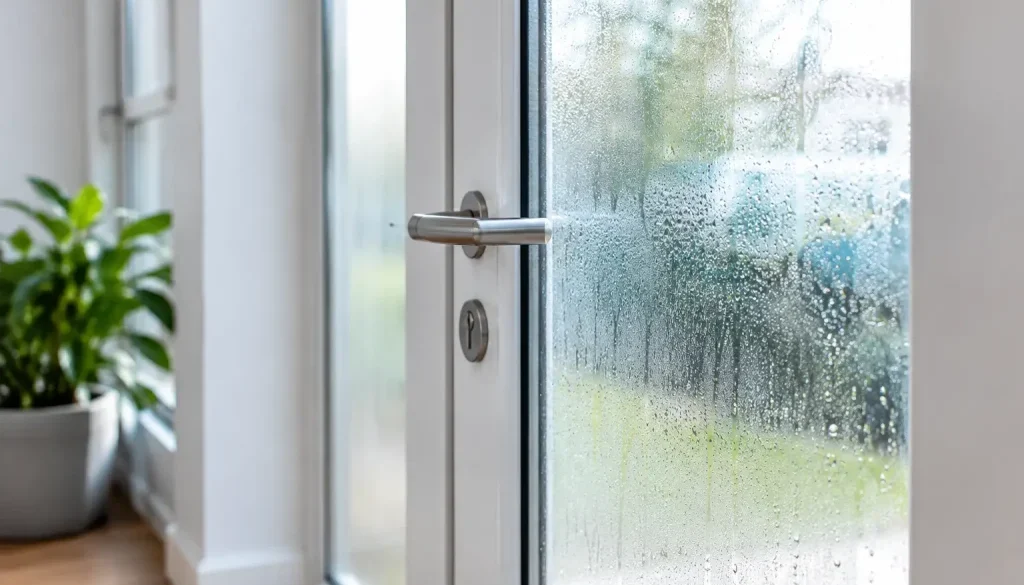
Indoor condensation forms on the room-side surface of the glass, frame or threshold. This is the most familiar type, and it usually indicates a combination of high internal humidity, a cold surface and limited airflow around the opening. It is often worst overnight, when heating may be reduced and doors remain closed.
External condensation appears on the outside face of high-performance double or triple glazing. While it can be inconvenient, it is generally a sign that the outer pane is staying cool because little heat is escaping from inside. It normally clears as the glass warms during the day.
Condensation between glass panes is different. It points to a failed sealed unit, where the perimeter seal has allowed moisture into the cavity. No amount of ventilation or heating adjustment will resolve this. The insulated glass unit needs professional assessment and, in most cases, replacement.
Door condensation can also collect around frame edges and along the bottom of the door. These areas deserve attention because prolonged moisture can damage finishes, encourage mould growth on adjacent plaster or reveal an installation issue such as an incomplete seal, cold bridge or poorly insulated reveal.
Preventing door condensation with the right specification
For new-build, refurbishment and extension projects, thermal performance should be addressed at the specification stage. A thermally broken aluminium door separates the colder external aluminium from the warmer internal section with an insulating polyamide barrier. This substantially reduces heat transfer through the frame compared with older, non-thermally broken metal systems.
Glass selection matters just as much. A low-emissivity coating, correctly filled sealed unit and warm-edge spacer bar help keep the internal pane warmer. The warmer the room-side surface, the less likely moisture is to settle on it. Door U-values should be considered alongside the full opening, including frame, glass and installation details, rather than assessing the centre pane alone.
That said, chasing the lowest possible U-value is not the entire answer. A large sliding door or bifold installation can have excellent glass and frame performance but still experience condensation if it opens into a kitchen-diner with frequent cooking, no extraction and consistently closed trickle vents. Product performance and ventilation must be designed as a pair.
For trade customers, it is worth discussing the room’s intended use before finalising the system. A slimline heritage-style door, for example, may have different sightlines and glazing constraints from a contemporary sliding door. Both can perform well when properly specified, but the required glass build-up, frame depth and achieved thermal value may differ.
Start with moisture control inside the property
Most recurring internal condensation is a humidity issue first. Everyday living produces a surprising amount of water vapour, especially in occupied family homes. The aim is not to make a home draughty or cold. It is to remove moisture at source and give damp air a reliable route out.
Kitchen and bathroom extract fans should vent outside, not into a loft or internal space, and should continue running after cooking or showering where appropriate. Lids on pans, sensible use of cooker extraction and closing internal doors during high-moisture activities all reduce the volume of vapour reaching adjoining glazed areas.
Drying washing indoors is another frequent cause. If a tumble dryer is not externally vented or laundry must dry on an airer, use a room with openable windows or controlled mechanical extraction. A dehumidifier can be a useful short-term tool during building work, after plastering or while a newly occupied home settles, but it should not become a substitute for fixing inadequate ventilation.
Background ventilators must remain open and clear where they are part of the ventilation design. Closing them permanently may seem sensible during cold weather or near a busy road, but it traps moisture indoors. In many properties, opening vents and using extraction consistently is more effective than leaving windows wide open for short periods.
Keep the glass and frame warm enough
Steady background heating generally performs better than allowing rooms to become very cold overnight and then rapidly heating them in the morning. The latter can create cold surfaces precisely when indoor humidity is at its highest. This does not mean overheating the room. It means avoiding sharp temperature swings where possible.
Air must also circulate around the door. Heavy curtains drawn tightly across glazing, furniture pushed against a frame and full-width blinds held closed for long periods can trap cool air next to the surface. A small gap around window coverings allows warm room air to reach the glass and helps moisture evaporate before it accumulates.
Threshold areas need particular care in extensions with tiled or concrete floors. A cold floor edge, an uninsulated upstand or a break in insulation at the reveal can create a local cold spot even when the door itself is well made. This is why installation details should be agreed early between the door supplier, builder and designer, rather than treated as a final-stage fitting issue.
Check installation before blaming the door
A quality aluminium door relies on accurate survey, suitable packers, correctly positioned fixings and a continuous weather and airtightness strategy. If gaps around the perimeter are poorly sealed, cold external air can chill the frame and surrounding finishes. If internal seals are incomplete, warm moist air may reach colder parts of the construction.
Look for repeated condensation at one corner, around a particular mullion, or on the wall immediately beside the frame. A consistent local pattern is more likely to indicate a thermal bridge or installation detail than a general room-humidity problem. Similarly, visible draughts, staining, failed sealant or water ingress after driving rain should be investigated promptly.
For installers, photographs taken first thing in the morning can be useful. Capture the full door, the affected area, the room layout and any nearby vents or radiators. This provides a clearer starting point for diagnosis than a general report that the glass is wet. It also helps separate internal condensation from genuine weather penetration.
In completed projects, homeowners should avoid drilling through frames, blocking drainage paths or applying films that were not approved for the glass specification. These alterations can affect drainage, thermal stress and warranty support. Maintenance is straightforward: keep drainage channels clear, clean seals and tracks regularly, and report damaged gaskets or failed units before secondary problems develop.
When condensation is a building-wide issue
Highly insulated homes are designed to retain heat, which is good for energy use but makes controlled ventilation essential. A draughty older home may have masked high humidity through uncontrolled air leakage. Once replacement doors and windows improve airtightness, moisture that previously escaped may show up on colder surfaces elsewhere.
This does not mean new doors cause condensation. More often, they reveal that the property needs a more deliberate ventilation approach. Depending on the building, this may involve upgraded intermittent extraction, humidity-controlled fans, trickle ventilation, positive input ventilation or a whole-house mechanical system. The appropriate choice depends on the property layout, occupancy and existing ventilation provision.
For larger developments and architect-led projects, condensation risk should be considered alongside Part L energy performance and Part F ventilation requirements. Early coordination prevents costly remedial work after handover, especially where large-format sliding doors, rooflights and extensive glazing are central to the design.
Rhino Aluminium manufactures thermally broken aluminium doors and glazed systems for projects that require strong thermal performance, precise fabrication and dependable technical support. The right system provides a sound foundation, but the best results come when product specification, installation and room ventilation are treated as one joined-up detail.
A dry, comfortable glazed opening is not achieved by simply turning up the heating or wiping the pane each morning. Find the source of moisture, keep the internal glass surface warm, and make sure the building can move humid air outside. That practical approach protects the door, the surrounding finishes and the long-term comfort of the people using the space.